Plumbing services

Leaks, drains, water heaters and fixtures. Each section below covers what the service is for, the signs that point to it, and how to get ready for a visit.

Leak repair

For water that's escaping somewhere it shouldn't: a dripping spout, a joint under the sink, a supply line to a toilet or appliance, or a pipe you can reach in a basement or crawl space. Small leaks waste water and can soften cabinets, floors and drywall over time.

Signs it may be relevant

  • A drip that continues with the handle fully off
  • Water pooling inside a sink cabinet
  • A stain, bubble or soft spot on a ceiling or wall
  • A higher water bill with no change in use

Helpful before the visit

  • Find your main shutoff valve if you can
  • Clear the cabinet or area around the leak
  • Take a photo of where the water shows up

If a leak is inside a wall or ceiling, opening and patching the surface may need another trade. You'll be told if that's likely.
Illustrative close-up of copper pipe lengths, brass fittings and a red pipe wrench
Illustrative photo

Drain clearing

For drains that have slowed down or stopped. Kitchen sinks usually clog with grease and food scraps, while bathroom drains collect hair and soap. The goal is to clear the blockage and find out whether it's likely to come back.

Signs it may be relevant

  • Water that stands in a tub or shower after use
  • Gurgling from a drain or toilet
  • More than one fixture backing up at once
  • A sewer smell near a drain

Helpful before the visit

  • Note which drains are affected, and when it started
  • Mention any chemical drain cleaner already used
  • Stop using the affected fixture if it's backing up

When several drains back up together, the blockage may be further down the line. That can change what the job involves.

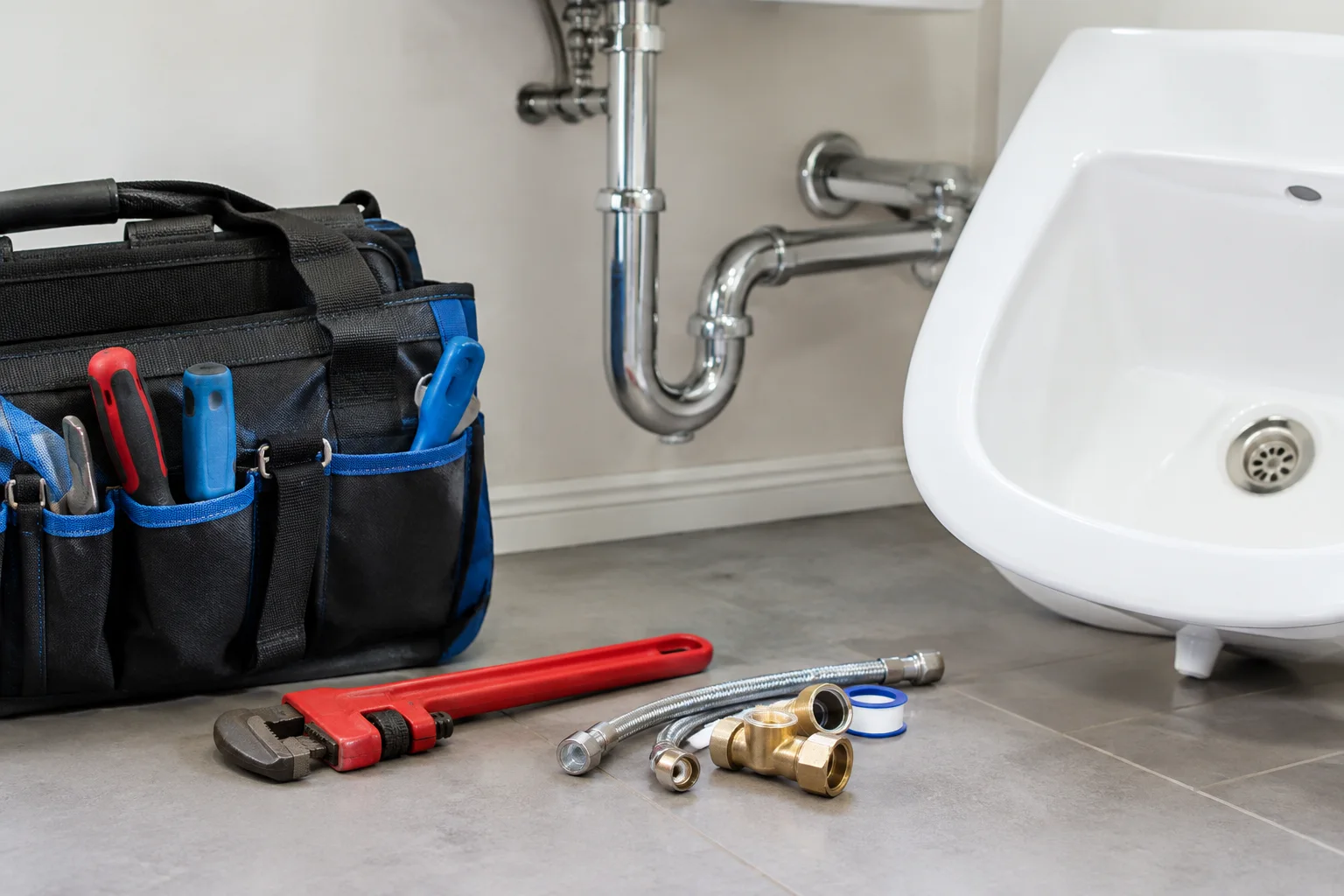
Illustrative photo of a chrome sink trap beneath a basin, with a tool bag and wrench on the floor
Illustrative photo

Water heaters

For hot water that's lukewarm, runs out fast, takes too long to arrive or has stopped altogether. Some problems are a part that can be replaced. Others point to a tank or unit near the end of its life, and then the conversation turns to replacement options.

Signs it may be relevant

  • Water around the base of the tank
  • Popping or rumbling while it heats
  • Rusty or discolored hot water
  • Hot water running out sooner than it used to

Helpful before the visit

  • A photo of the label on the unit (brand, model, size)
  • Whether it's gas or electric, if you know
  • A clear path to wherever it's installed

Fixtures

Repairs and installation for the things you use every day: kitchen and bathroom faucets, sinks, toilets and garbage disposals. That covers a toilet that won't stop running as well as a new faucet you've picked out for a remodel.

Signs it may be relevant

  • A toilet that runs, rocks or won't flush properly
  • A faucet that's stiff, loose or low on flow
  • A disposal that hums but won't turn
  • A fixture you want replaced or upgraded

Helpful before the visit

  • If you've bought the fixture, include the make and model
  • Say whether old fixtures need to be taken away
  • Clear the area under and around the fixture
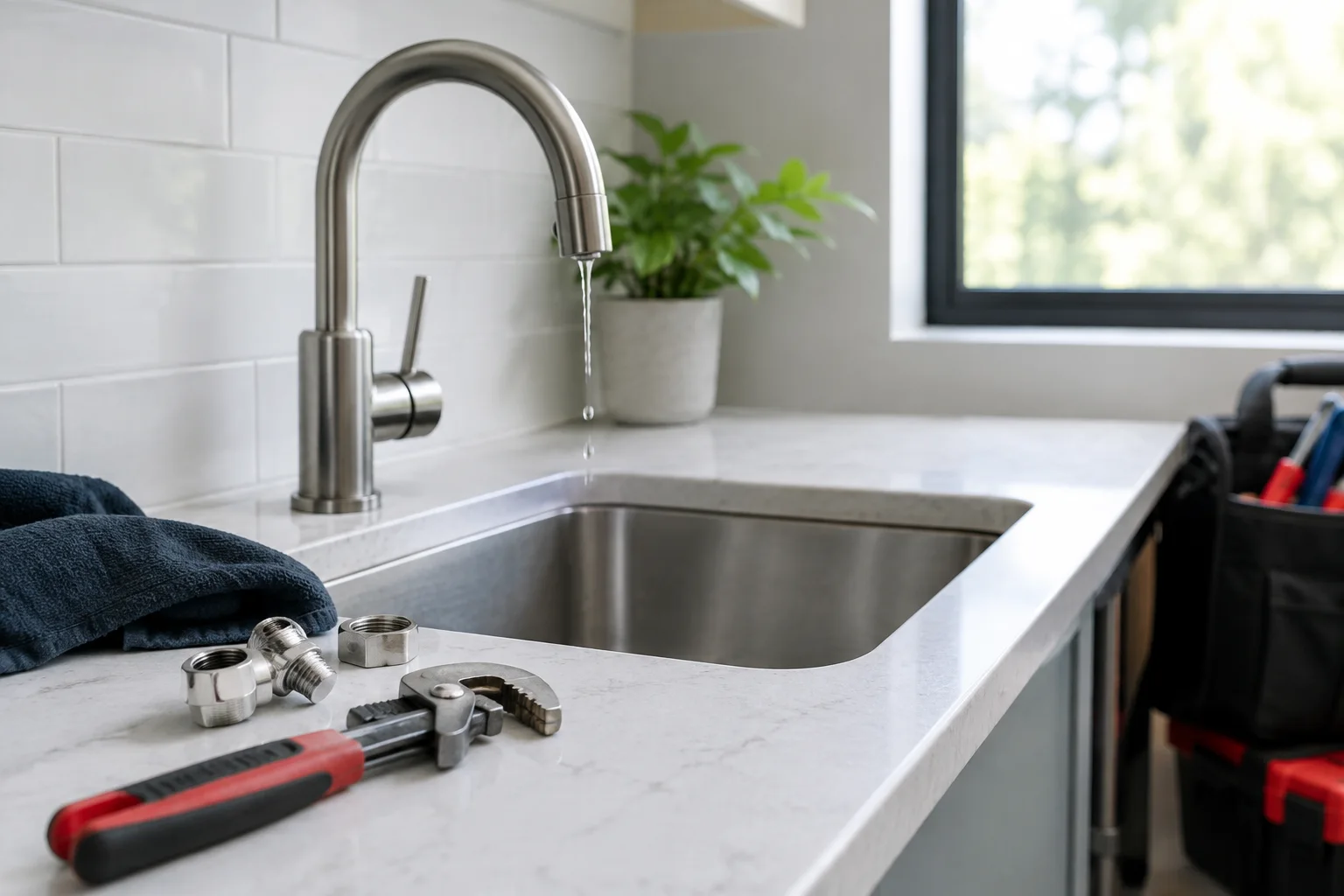
Illustrative photo of a stainless kitchen faucet over an undermount sink
Illustrative photo

How pricing works

Prices aren't listed on this site. Plumbing costs depend on what's found, which parts are needed and how easy the problem is to reach, so the price is talked through once the job is understood.

Sending a request doesn't commit you to anything, and it doesn't confirm a price or a visit time.

Request service