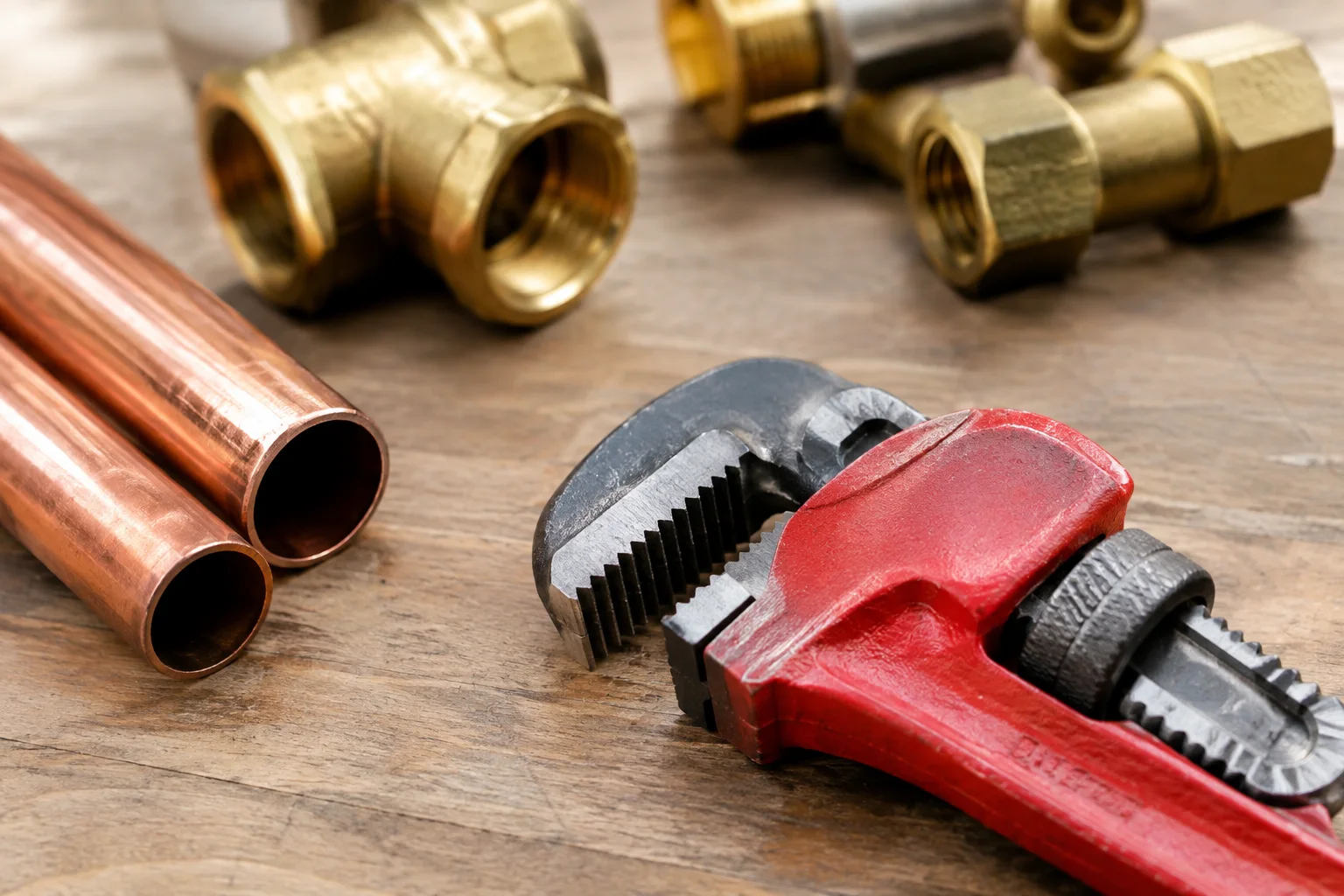
From arrival to cleanup
-
Protect the space
Drop cloths or towels go down around the work area, and anything in the way gets moved with your say-so.
-
Find the source
Water travels, so the drip you see isn't always where the leak starts. The fixture, valves and reachable pipe get checked first.
-
Agree on the fix
You hear what's wrong in plain language, what the options are and how the price is worked out.
-
Shut off and repair
The water is shut off at the nearest valve where possible, so the rest of the house keeps running.
-
Test it with you
Water goes back on, joints are checked for drips and drains are run so you can see the result.
-
Clean up
Old parts and packaging are bagged up, and the area is wiped down before the plumber leaves.
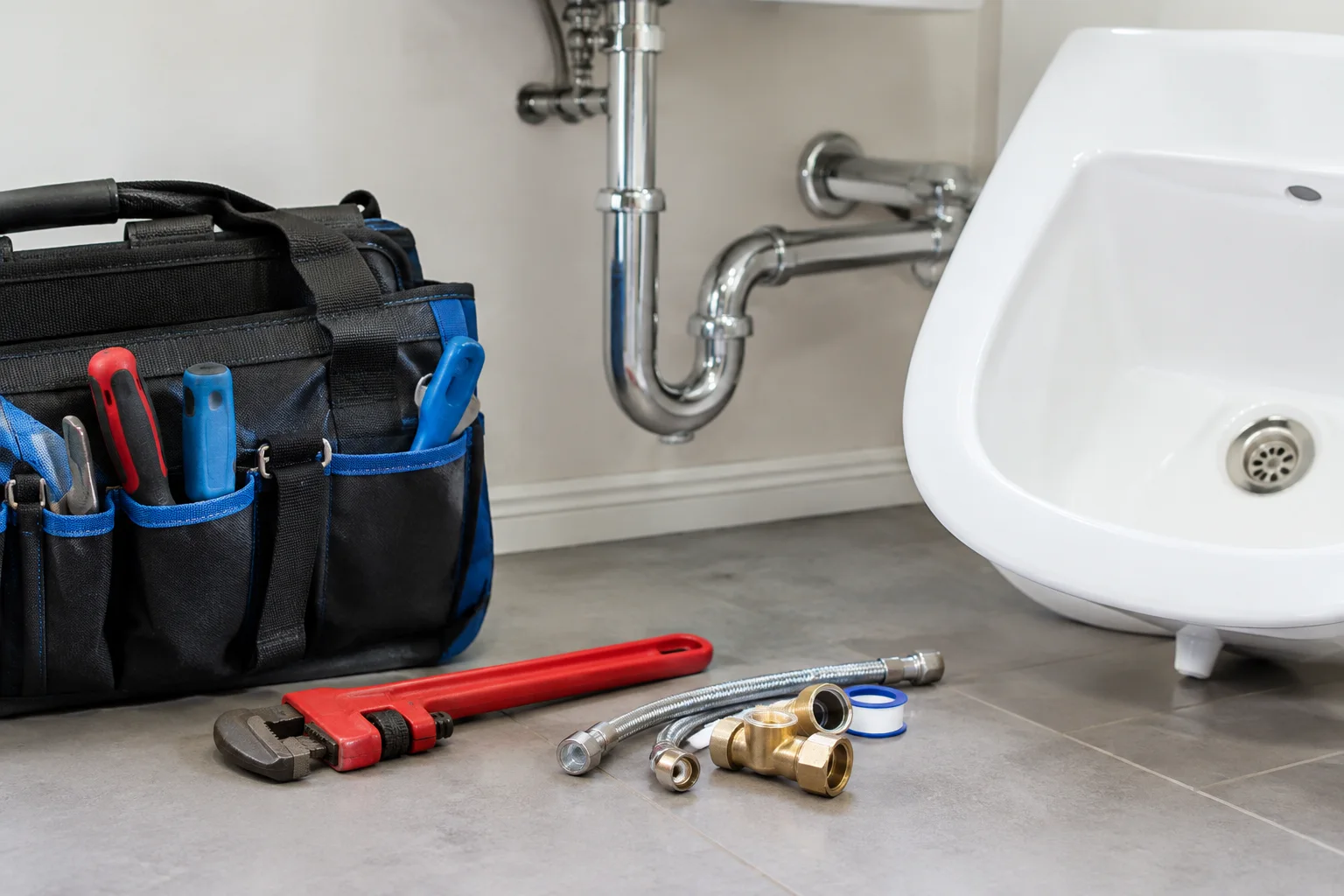
What a typical visit relies on
Most household repairs come down to a few dependable tools and the right replacement parts.
- Pipe and adjustable wrenches
- For threaded pipe, nuts on supply lines and fixture connections.
- Thread-seal tape and fittings
- To seal threaded joints and join pipe of different sizes.
- Supply lines and shutoff parts
- The flexible lines that feed faucets and toilets wear out and are often the source of a leak.
- Drain tools
- Hand augers and plungers for clogs in sinks, tubs and toilets.
Questions about the work
Will the water need to be shut off?
Usually, for part of the job. Where there's a shutoff valve at the fixture, only that fixture goes without water. Otherwise the main shutoff is used, and you'll know before it happens.
Do I need to be home?
Someone over 18 should be there to let the plumber in and agree on the work. If that's hard to arrange, say so in your request.
Can you install a fixture I bought myself?
Often, yes. Include the make and model in your request so it can be checked for fit and connections before the visit.
What happens to the old parts?
They can be taken away or left for you. Mention your preference, especially for larger items like a toilet or water heater.